
The complete guide
H3 Halogen Headlight Bulbs, A Plain Buyer's Guide
The problem nobody notices until it is dark
Headlight bulbs rarely die in a dramatic way. They dim. A filament bulb loses a little output every month it is used, and because your eyes adapt at the same slow pace, the change hides itself. Then one wet evening you turn off a lit main road onto an unlit lane, and the beam seems to stop about two car lengths in front of the bonnet.
Most people only work it out when one side actually blows. You pull into a petrol station, see one bright patch on the wall and one weak yellow one, and realise the "good" bulb has been quietly fading for a couple of years.
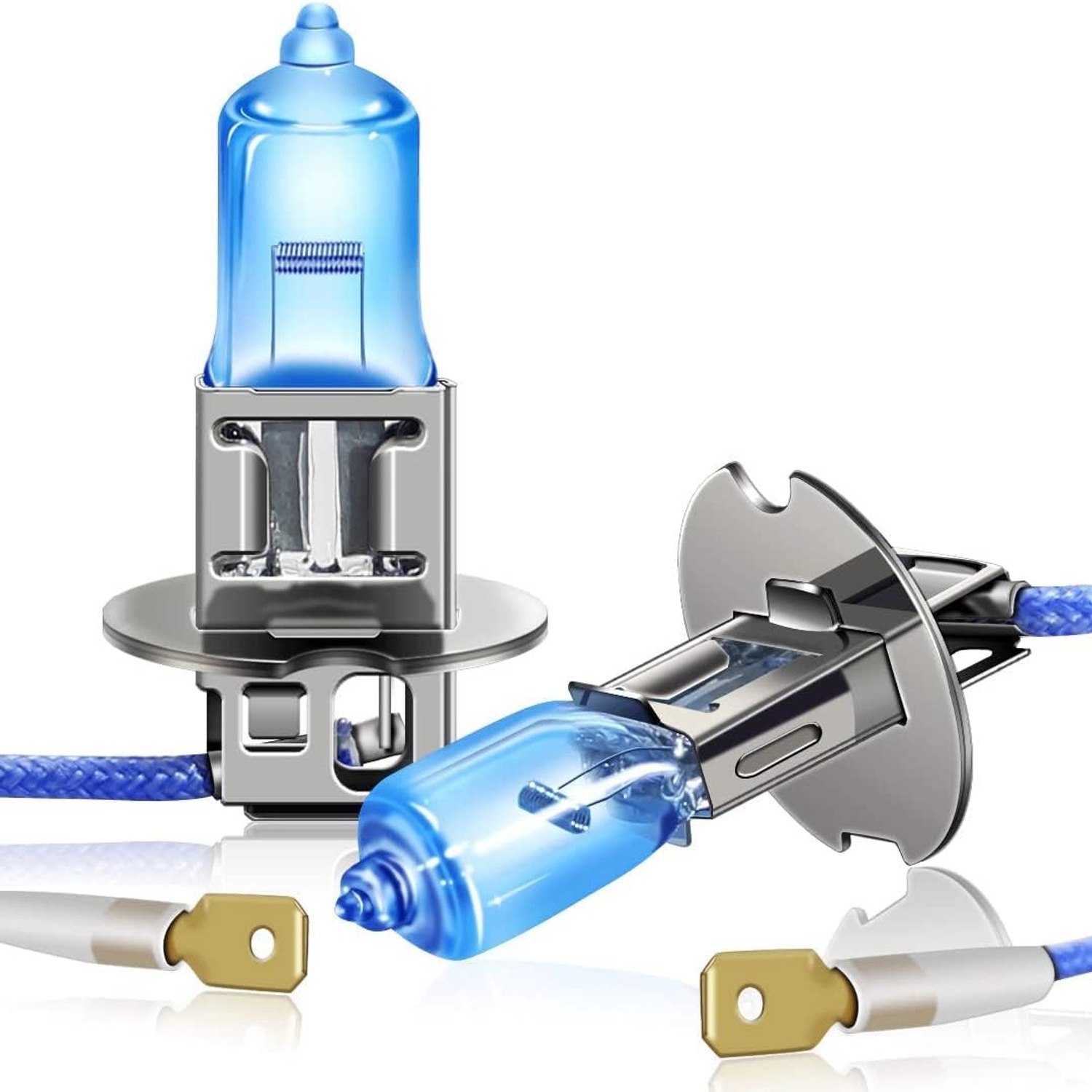
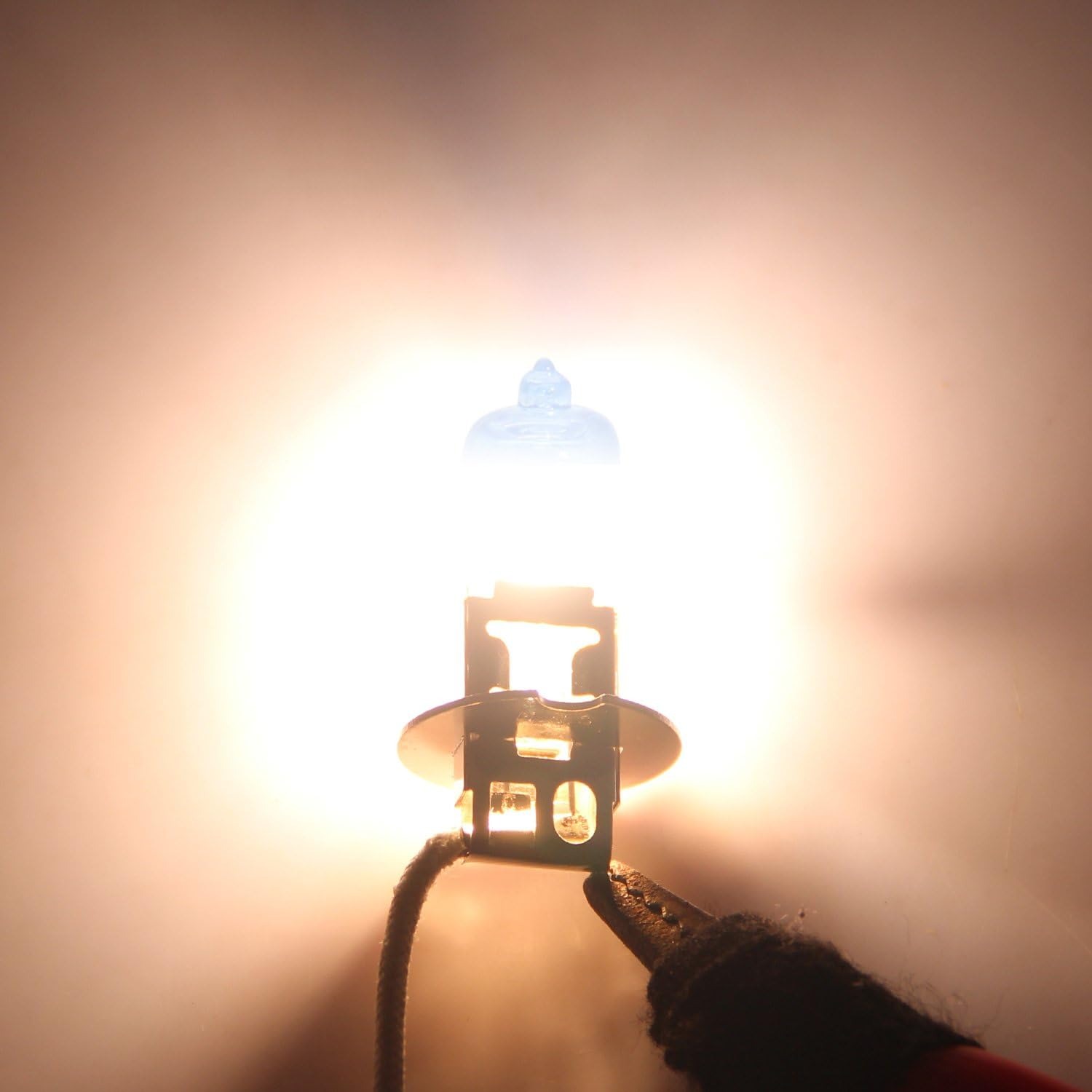
That is the job this pack is for. Two H3 halogen headlight bulbs, 12 volts and 55 watts each, with a 5500 Kelvin colour temperature. Change both sides, close the covers, and the front of the car matches again.
What H3 actually means
H3 is a fitting code. It describes the physical shape of the bulb base, where the filament sits relative to that base, and how the bulb clamps into the lamp housing.
The reason this matters so much is that a headlamp reflector is designed around one precise filament position. Move the light source a couple of millimetres and the beam pattern changes shape. That is why you cannot substitute an H1, H4, H7 or HB4 bulb for an H3, even if you could physically wedge it in. The code has to match.
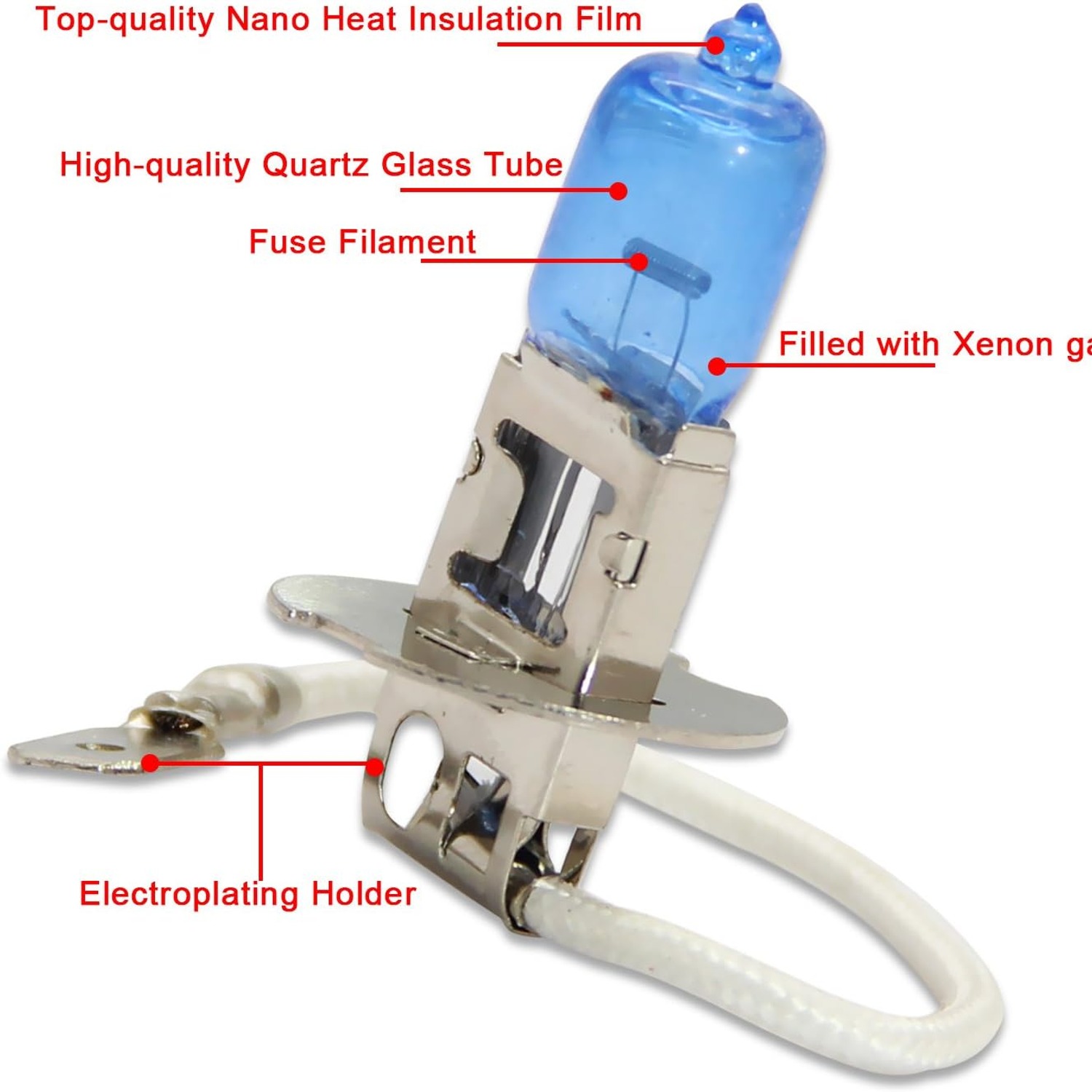
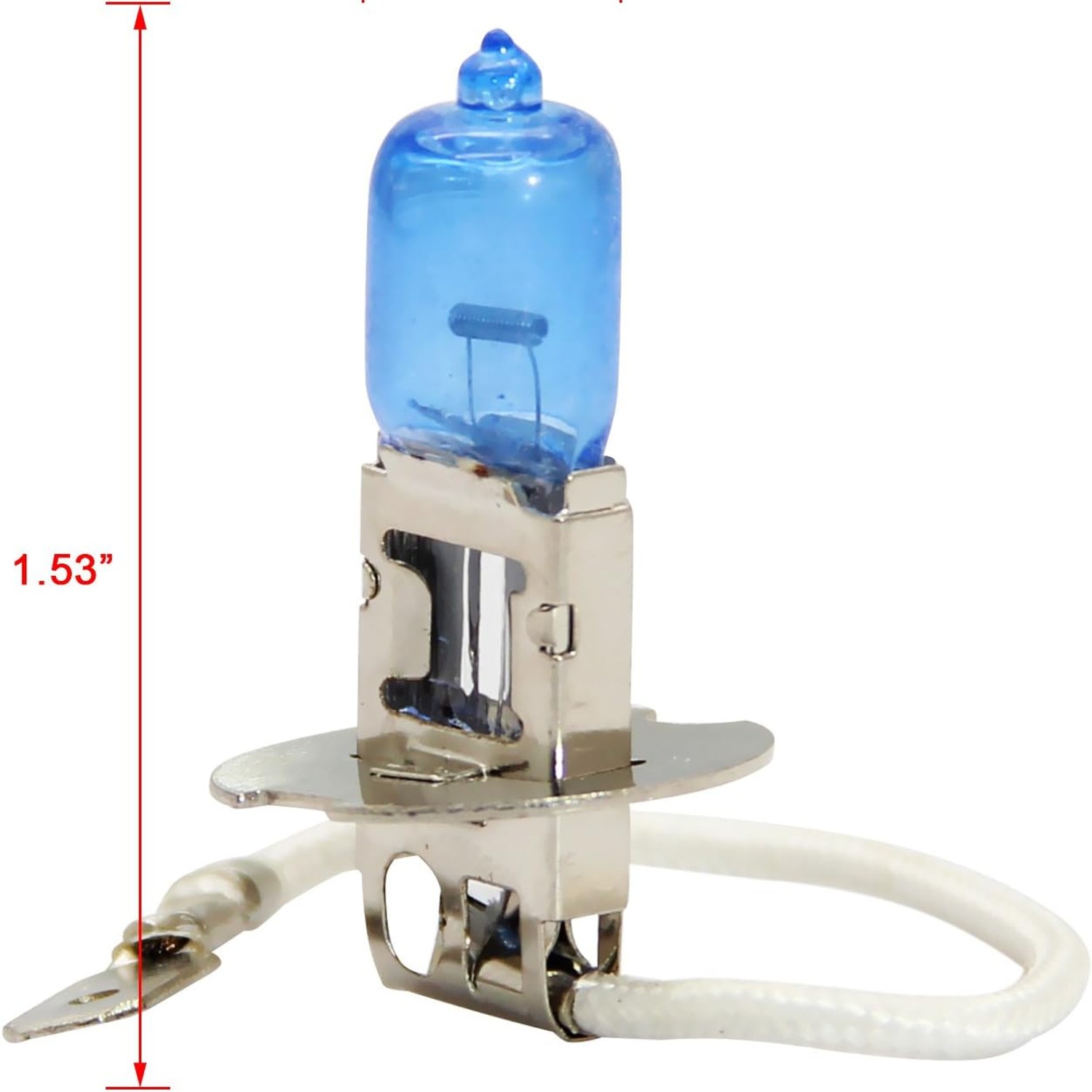
H3 is a single-filament bulb, which means it does one job rather than switching between dipped and main. It also has a short flying lead with a connector on the end rather than a plug built into the base, which is the quickest way to recognise one on sight.
On different cars, the same H3 bulb may sit in a main beam lamp, a front fog lamp or an auxiliary driving lamp. Aftermarket spot lamps have used this fitting for years, which is why people looking for the best h3 fog light bulb and people looking for a driving light bulb often end up at the same product.
Reading the specification
There are only a few numbers here and they are each worth understanding.
12 volts is the system voltage. Cars run at 12 volts, so this is the normal figure for a passenger vehicle. Larger commercial vehicles often run 24 volt electrics and need bulbs rated accordingly.
55 watts is the power the bulb draws. For an H3 this is the standard rating and it is what the vast majority of factory H3 lamps are built around. Check the wattage printed on the bulb you are taking out and make sure it agrees.
5500 Kelvin describes the colour of the light. Lower Kelvin numbers look warm and yellow. Higher numbers look cool and white, moving towards blue at the far end. At 5500K the light reads as clean white. This is a description of tone and nothing else. It does not tell you how much light comes out, and you should treat any Kelvin number as a colour note rather than a performance claim.
Pack of two is simply quantity, but it is the detail that saves most people a second job.
You will notice what is not listed.
Who these suit
They suit anyone whose car or lamp takes an H3 bulb and who wants a straight replacement. That covers the driver with one blown bulb, the owner doing a bit of winter prep before the clocks change, and the person who fitted a pair of spot lamps to a 4x4 and now needs replacements.
They also suit the cautious type who keeps spares in the boot. Carrying a known-correct pair in the glove box is one of the cheapest bits of peace of mind available to a driver, and the best glove box spare bulbs are simply the ones that match the fitting your car already uses.
They do not suit anyone wanting to change technology. If you are set on LED, this is not that product. If you need a bulb with a particular approval marking printed on it, read the marking on your existing bulb and contact us first, because we do not claim an approval mark for this one.
How to choose correctly, in two minutes
Start with the owner manual. That is the quickest answer.
If the manual has gone missing, take the old bulb out and read it. The fitting code is printed on the metal collar along with the voltage and wattage. If the code says H3 and the figures say 12V 55W, you are looking at the right part.
Do not rely on what fits a friend's car of the same model. Manufacturers change lamp units between model years and between trim levels, and a facelift can bring a completely different bulb. The bulb in your hand is the only source worth trusting.
If anything is unclear, ask before you order. Telling us what is printed on the old bulb takes a moment and saves a return.
Fitting them without drama
Work with the ignition off and the lights switched off. If the bulb has been running, give it time to cool. Halogen bulbs get very hot and the housing around them holds heat too.
Access is the unpredictable part. Some cars give you a generous gap behind the headlamp with a dust cap you twist off by hand. Others expect you to pull back a section of wheel arch liner, or shift the battery or an air box. Have a look before you commit to doing it in a dark car park.
When you have the old bulb out, note how it was oriented and how the lead was routed. Handle the new bulb by its metal base or keep it in the packaging until the moment it goes in. Do not touch the glass with bare fingers, because the oil left behind can create a hot spot once it is lit. If you do touch it, wipe the glass with a lint-free cloth and a little isopropyl alcohol and let it dry.
Seat the bulb fully, fit the retaining clip or ring properly, and clip the lead where the old one ran so it is not resting on hot metal. Then make sure the dust cap or cover goes back on properly. A badly seated cover lets moisture into the housing, and condensation inside a headlamp is a much bigger nuisance than the bulb you came to change.
Test both lamps before you put the tools away.
Looking after them
There is very little to do once a halogen bulb is fitted. Keep the lens clean, because a hazed or filthy headlight cover wastes more light than most people realise. Keep the housing sealed. And keep the spare in its box somewhere dry.
If a new bulb fails very quickly, that is sometimes a sign of something else going on, such as vibration from a loose lamp unit or a charging fault pushing the voltage too high. Worth a look rather than just fitting another one.
The short version
This is a pair of H3 halogen headlight bulbs, each 12 volts and 55 watts, with a 5500K colour temperature that reads white rather than yellow. They replace an existing H3 bulb and nothing else.
Check the fitting in your owner manual or on the old bulb before ordering. Handle the new bulbs by the base, let the old ones cool first, and reseal the housing when you are done. If you need a bulb with a specific approval marking, ask us before you buy.
Change both sides together, and the next dark lane will look a good deal less like a tunnel.