
The complete guide
HB4 9006 Halogen Headlight Bulbs: A Practical Buyer's Guide
The problem with headlight bulbs is that they fade quietly
Very few headlight bulbs die in a dramatic way. What usually happens is slower than that. The filament ages, the glass darkens a little, and the light that reaches the road twenty metres ahead gets weaker month by month. Because your eyes adjust along with it, you often do not notice until one side gives up completely. Then you pull onto a dark road, see one strong beam and one weak one, and realise how much output you had lost without noticing.
That is the point most people go looking for a replacement. And it is also why a pair matters. If one bulb has reached the end of its working life, the other one has been running the exact same hours in the exact same conditions. Replacing both keeps the two headlights looking the same and saves you doing the job twice in a few months.
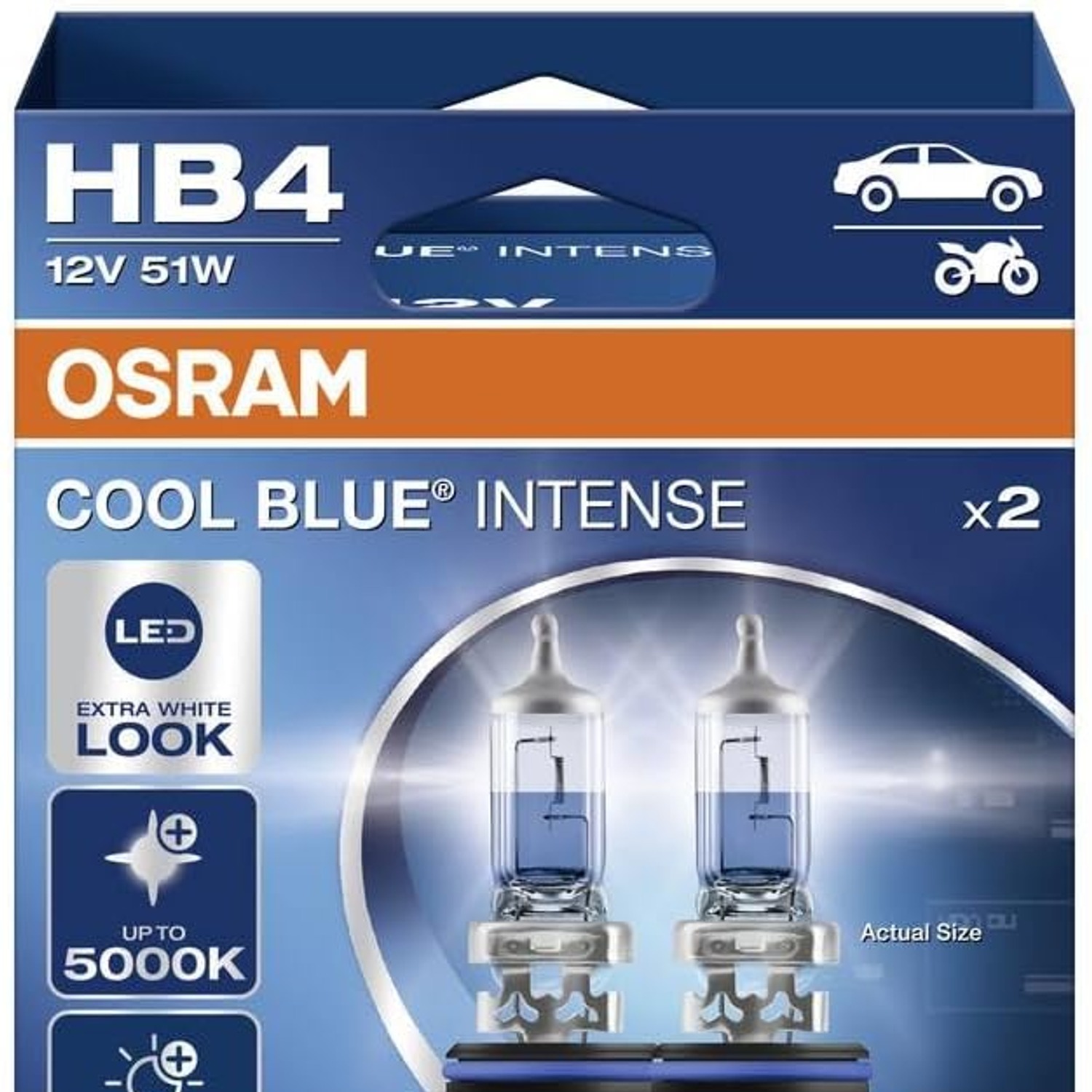
This pack holds two HB4 9006 halogen headlight bulbs, rated at 12 volts and 51 watts, with a quoted light colour of 5000 Kelvin.
What HB4 and 9006 actually mean
HB4 and 9006 are two names for the same bulb fitting. You will see one written on the box, the other stamped on the base of a bulb, and occasionally both together. There is no difference between them. The naming just reflects two different standards that ended up describing the same part.
The fitting is the part that matters most when you buy. A bulb base has a particular shape, tab layout and connector so that it only goes into a housing built for it. That is deliberate. It stops someone fitting the wrong bulb and ending up with a beam pointing at the hedgerows instead of the road.
So the single most useful thing you can do before ordering is read the marking on the bulb already in your car. Pull it out, turn it over, and look for HB4 or 9006 printed on the base or the collar. If the marking says something else, this is not the bulb for you. The owner manual is the other place to check, and it will usually list the fitting for dipped beam, main beam and fog lights separately.
We list this product by fitting type only. We do not say it suits a particular make or model, and we do not claim an approval marking for it. If you need a bulb that carries a specific marking, check what is on your old bulb and ask us first.
Colour temperature, and what it does not tell you
The 5000K figure describes the colour of the light. Lower numbers look yellow, higher numbers look blue, and the middle of the range reads as white. At 5000K the beam has a clean white tone, noticeably cooler than the amber look a lot of people associate with older halogen bulbs.
What colour temperature does not tell you is how much light the bulb produces. Those are separate measurements, and a very high Kelvin number does not mean more light. Sometimes it means less usable light on the road, because very blue beams can scatter more in rain and fog. Around the 4000K to 5000K area tends to be a comfortable compromise for most drivers, white enough to look modern but not so blue that the road surface goes flat.
Who this pack suits
This is a sensible buy if your car takes an HB4 or 9006 bulb and one of them has failed, dimmed, or started flickering. It is also a reasonable buy if you simply want both sides refreshed because the beams have gone tired and uneven. Some owners keep a spare pair in the boot, which is not a bad habit for anyone who drives a lot at night or covers long rural routes.
It is not the right pack if your car uses a different fitting. It is also not what you want if you are after LED or HID. These are halogen bulbs with a filament, and they work the way halogen bulbs have always worked.
Vehicles differ in how easy the job is. On some cars you reach behind the headlight, twist the collar and the bulb is out in under a minute. On others you need to remove a cover, shift a washer bottle, or go in from under the wheel arch. Have a look at the back of your headlight before you start so you know what you are dealing with.
Fitting them without ruining them
There are only a handful of rules, but they matter.
Let everything cool. Headlight bulbs get very hot in use, and a bulb you switched off two minutes ago will still burn you. Give it time.
Keep your fingers off the glass. Hold the new bulb by its metal base or plastic collar. Skin leaves an oily film behind, and when the bulb heats up, that patch heats unevenly. If you do touch the glass, wipe it with a lint-free cloth and a little methylated spirit, then let it dry fully before fitting.
Seat the bulb properly. It should drop into place with no forcing, then clip or twist to lock. If it feels like it needs pressure, stop and check the orientation rather than pushing harder.
Test before you reassemble. Switch the lights on, walk round the front of the car, and check both sides. It is a lot less annoying to find a loose connector now than after you have put the cover and the air intake back.
While you have the bonnet open, it is worth looking at the lens itself. A hazy or yellowed headlight lens scatters light no matter how fresh the bulb behind it is. A clean lens is free performance.
Looking after them
Once they are in, halogen bulbs do not ask for much. Keep the headlight housing sealed, because moisture inside the unit is hard on bulbs and worse for reflectors. If you notice condensation building up behind the lens, deal with that rather than just replacing bulbs more often.
Spares want to stay in their packaging until you need them, somewhere dry and away from tools that can knock the glass. A small box in the garage or a corner of the boot is fine.
No service life is stated for this bulb, so we will not quote hours. What affects bulb life in practice is how often the lights run, how much vibration the car sees, whether water gets into the housing, and whether anyone handled the glass with bare fingers during fitting. Only that last one is entirely in your hands.
The short version
This is a two-bulb pack with the HB4 fitting, which is the same thing as 9006. Each bulb is rated at 12 volts and 51 watts, and the light colour is quoted at 5000K, so the beam reads white rather than yellow.
Before ordering, confirm the fitting. Read the marking on the bulb you are removing, or check the owner manual. We sell by fitting type only, we do not claim a vehicle match, and we do not claim an approval marking for this bulb. If an approval marking matters for your situation, check your existing bulb and ask us before you buy.
When you fit them, let the old ones cool, keep your fingers off the glass, and change both sides at once. That last point is the one most people skip and most people regret.